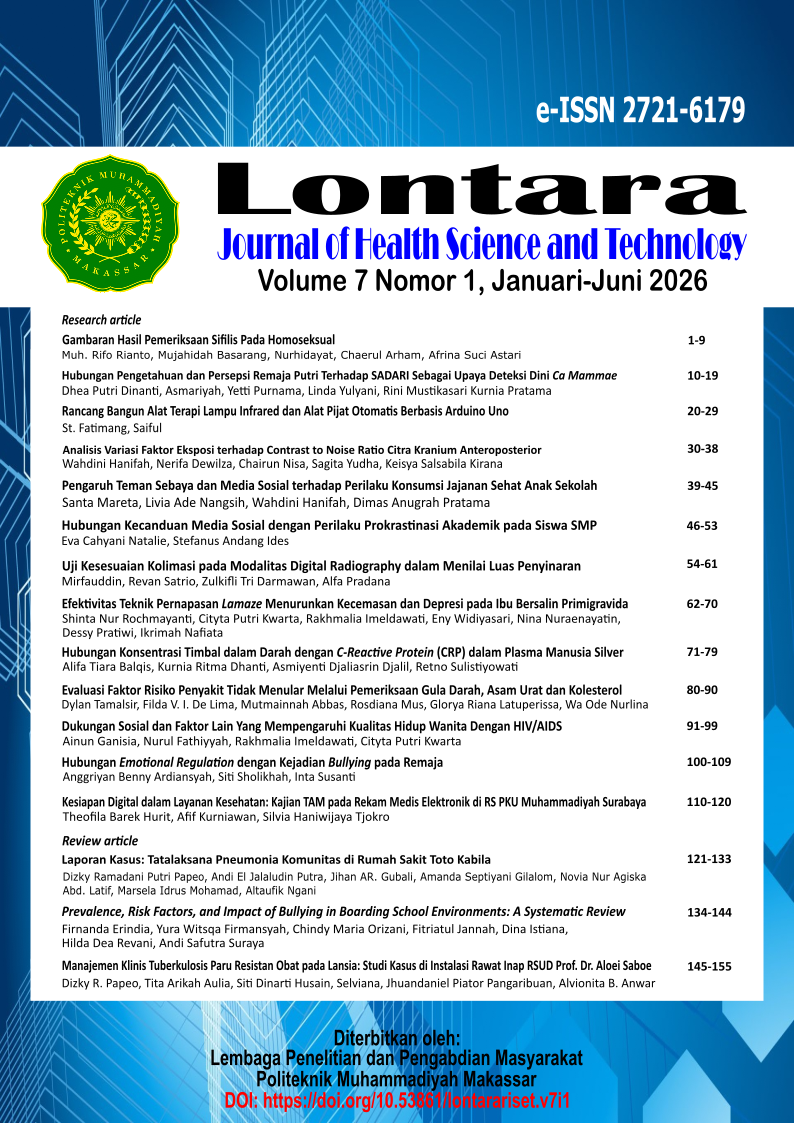
Digital Readiness in Healthcare Services: A Study of the Technology Acceptance Model (TAM) on Electronic Medical Records in Hospitals
DOI:
https://doi.org/10.53861/lontarariset.v7i1.635Keywords:
Electronic Medical Records, Service Efficiency, Health Technology, TAMAbstract
The development of information technology has encouraged the implementation of Electronic Medical Records (EMR) to modernize and improve the efficiency, effectiveness, and quality of outpatient services in hospitals. This study aims to analyze the influence of external variables, perceived usefulness, perceived ease of use, attitude towards using, and behavioral intention to use on the actual Electronic Medical Record system at PKU Muhammadiyah Hospital in Surabaya. This study is an analytical observational study with a quantitative approach involving 29 employees as respondents using a questionnaire as a data collection instrument, which was then analyzed using multiple linear regression. Regression tests show that the variables Attitude Towards Using (0.000) and Behavioral Intention To Use (0.000) have a significant effect on the actual use of the system. This means that users' positive attitudes towards the electronic medical record system play a major role in encouraging the adoption and actual use of the system. This implies that the better the users' attitude toward the system, the higher the likelihood that they will consistently use the system in the hospital environment. Psychological factors and users' internal motivation are more decisive in the success of technology adoption than other factors such as experience or direct assessment of benefits.
Downloads
References
Antaris, B., Faroqi, A., & Wulansari, A. (2023). Faktor-Faktor Penerimaan Aplikasi Mobile Rumah Sakit Bhayangkara Surabaya Dengan Metode TAM. KLIK: Kajian Ilmiah Informatika Dan Komputer, 3(6), 843–851. https://doi.org/10.30865/klik.v3i6.919
Asih, H. A. (2023). Perkembangan Rekam Medis Elektronik di Indonesia: Literratur Review. Jurnal Promotif Preventif, 6(1), 182–198.
Asti Nurhayati, Ummu Muti’ah, & Yuniarti Yuniarti. (2023). Peningkatan Mutu Dan Efisiensi Pelayanan Kesehatan Melalui Implementasi Rekam Medis Elektronik di Rumah Sakit. ALKHIDMAH: Jurnal Pengabdian Dan Kemitraan Masyarakat, 1(3), 187–195. https://doi.org/10.59246/alkhidmah.v1i3.485
Direktorat Pelayanan Kesehatan Rujukan. (2022). Laporan Akuntabilitas Kinerja Instansi Pemerintah 2022.
Efendi, B., Ekasari, S., Sani, I., Wakhidah, E. N., & Munizu, M. (2024). Analysis Of The Influence Of Behavioral Intention, Perceived Ease Of Use And Perceived Usefulness On Actual Usage Of Digital Wallet Customers. JEMSI (Jurnal Ekonomi, Manajemen, Dan Akuntansi), 10(1), 209–214. https://doi.org/10.35870/jemsi.v10i1.1897
Heryanta, J. (2019). Pengaruh Behavioral Intention Terhadap Actual Use Pengguna GO-JEK Indonesia dengan Pendekatan Technology Acceptance Model dan Innovation Diffusion Theory. Jurnal Ilmiah Mahasiswa FEB Universitas Brawijaya, 7(2), 1–11.
Ikawati, F. R. (2024). Efektivitas Penggunaan Rekam Medis Elektronik Terhadap Peningkatan Kualitas Pelayanan Pasien di Rumah Sakit. Ranah Research: Journal of Multidisciplinary Research and Development, 6(3), 282–292.
Irawati, T., Rimawati, E., & Pramesti, N. A. (2020). Penggunaan Metode Technology Acceptance Model (TAM) Dalam Analisis Sistem Informasi Alista (Application Of Logistic And Supply Telkom Akses). Is The Best Accounting Information Systems and Information Technology Business Enterprise This Is Link for OJS Us, 4(2), 106–120. https://doi.org/10.34010/aisthebest.v4i02.2257
Izza, A. Al, & Lailiyah, S. (2024). Kajian Literatur: Gambaran Implementasi Rekam Medis Elektronik di Rumah Sakit Indonesia berdasarkan Permenkes Nomor 24 Tahun 2022 tentang Rekam Medis. Media Gizi Kesmas, 13(1), 549–562. https://doi.org/10.20473/mgk.v13i1.2024.549-562
Johansen, K. (2024). Peran kualitas sistem informasi dan Perceived Usefulness dalam meningkatkan kepuasan pasien rumah sakit swasta. Jurnal Manajemen Bisnis Dan Kewirausahaan, 9(10), 13–27. https://doi.org/10.24912/jmbk.v9i1.33832
Mayjeksen, A., & Pibriana, D. (2020). Technology Acceptance Model (TAM) untuk Menganalisis Penerimaan Pengguna Terhadap Penggunaan Aplikasi Belanja Online XYZ. JATISI (Jurnal Teknik Informatika Dan Sistem Informasi), 7(3), 580–592. https://doi.org/10.35957/jatisi.v7i3.382
Muhlizardy, Widyaningrum, N., Puspita, D., & Asanti, E. (2024). Evaluasi Penerapan Rekam Medis Elektronik di RS PKU Muhammadiyah Karanganyar. JMIAK: Jurnal Manajemen Informasi Dan Administrasi Kesehatan, 7(2), 134–142.
Mutmainah, I., Khotimah, H., & Sholehah, B. (2024). Hubungan Pengetahuan Rekam Medis Elektronik (RME) dengan Kesiapan Perawat Menggunakan Rekam Medis Elektronik (RME) di Rumah Sakit Wonolangan Probolinggo. TRILOGI Ilmu Teknologi, Kesehatan, Dan Humaniora, 5(September), 391–399.
Nurhaswinda, Egistin, D. P., Rauza, M. yahdi., Rahma, Ramadhan, R. H., Ramadani, S., & Wahyuni. (2025). Analisis Regresi Linier Sederhana dan Penerapannya. Jurnal Cahaya Nusantara, 01(02), 67–78.
Putri, Y. W., Saragih, T. R., & Purba, S. H. (2024). Implementasi dan Dampak Penggunaan Sistem Rekam Medis Elektronik ( RME ) pada Pelayanan Kesehatan. Jurnal Kesehatan Masyarakat, 3(4), 255–264.
Seftiani, S., & Ulfah, A. (2024). Tinjauan Penerapan Electronic Medical Record Instalasi Rekam Medis Bagian Coding Rawat Jalan di Rumah Sakit Azra Bogor. PREPOTIF : Jurnal Kesehatan Masyarakat, 8(2), 3428–3433.
Septiana, F. N., Rustiawati, S., & Sari, I. (2023). Analisa Implementasi Rekam Medis Elektronik Terhadap Efisisensi Pembiayan Di Unit Rekam Medis Rumah Sakit X. HIJP:Health Infromation Jurnal Penelitian, 15, 1–13.
Tyas, E. I., & Darma, E. S. (2017). Pengaruh Preceived Usefulness, Preceived Ease Of Use, Preceived Enjoyment, dan Actual System Use Terhadap Penerimaan Teknoogi Informasi: Studi empiris pada Karyawan Bagian Akutansi dan Keuangan Baitul Mall Wa Tamwil Wilaya Daerah Istimewa Yogyakarta dan Sekit. Reviu Akuntansi Dan Bisnis Indonesia, 1(1), 25–35. https://doi.org/10.18196/rab.010103
Vania, E., Suriyantoro, & Widjaja, L. (2022). Analisis Faktor Yang Mempengaruhi Perilaku Penggunaan Sistem Rekam Medik Elektronik Menggunakan Metode Utaut. Journal of Hospital Management, 5(02). https://doi.org/10.47007/.v5i02.5862
Wirantaja, I. K. G., & Darma, G. S. (2023). Determinan kesuksesan implementasi rekam medis elektronik rumah sakit. Medicina: Published By Medicina, Fakultas Kedokteran Universitas Udayana I, 54(2), 66–72. https://doi.org/10.15562/medicina.v54i2.1234
Zulfa, S., Sabila, L. T., Arseti, N. A., Mustofa, T., & Nugraha, J. T. (2024). Analisis Penerimaan Aplikasi Siaba (Sistem Absensi Berbasis Android) Dalam Perspektif TAM (Technology Acceptance Model) di SMP Negeri Kecamatan Secang, Kabupaten Magelang. Journal of Governance and Public Administration, 1(3), 334-345.
Downloads
Published
How to Cite
Issue
Section
License
Copyright (c) 2026 Theofila Hurit, Afif Kurniawan, Silvia Haniwijaya Tjoro

This work is licensed under a Creative Commons Attribution 4.0 International License.
Lontara Journal Of Health Science And Technology is licensed under Creative Commons.
The journal allows the author to hold the copyright of the article without restrictions.
The journal allows the author(s) to retain publishing rights without restrictions.
The legal formal aspect of journal publication accessibility refers to Creative Commons Attribution 4.0 International (CC BY 4.0).
The Creative Commons Attribution 4.0 International (CC BY 4.0) license allows re-distribution and re-use of a licensed work on the conditions that the creator is appropriately credited and that any derivative work is made available under “the same, similar or a compatible license”. Other than the conditions mentioned above, the editorial board is not responsible for copyright violations.